
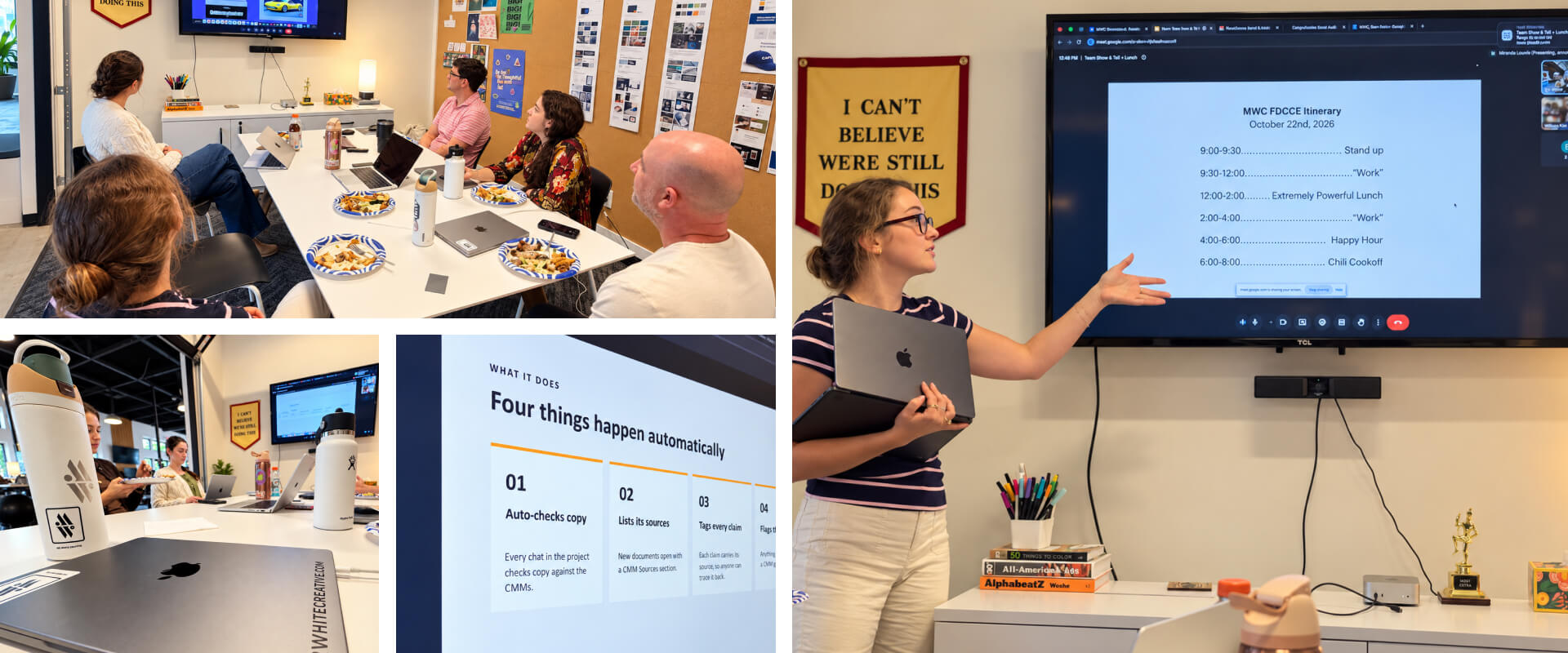
Once a month, the MWC team grabs lunch, takes over the conference room TV, and shows each other what we've been up to. We call it Show & Tell, and we've been doing it for most of 2026. The rules are simple: bring something you're proud of, something you learned, or something you think the rest of us should see. Sometimes there's a theme. Most of the time, it's a grab bag, and that's half the fun.
Here's what came up this month.
Wallace: An Inspiration Board Worth Bookmarking
Wallace joined remotely (and under the weather, which we appreciated) to walk us through the inspiration library he's been building in FigJam. It's part of our team onboarding board and gathers his favorite design resources in one place. Each site appears as a link card, many with a quick note on why it's worth a visit, so new team members can browse, click through, and add their own finds. Lauren added hers right after Show & Tell.
A few standouts:
- The Index, a curated gallery of design studios, designers, and type foundries
- Typehunting, which Wallace called "tons of old type reference, great place for emblems"
- System Magazine, where you can download old magazine PDFs
- IDEA / Superbooks, full of old book covers and sample spreads that make great art direction references
- Wiki Spy, a way to browse Wikipedia through images, and an easy way to lose an afternoon
The board also includes galleries, packaging case studies, type archives, and one Instagram account devoted entirely to old beer coasters. It's the same kind of collecting that feeds our mood boarding process.
Lauren: The Art of the Title Card
Lauren's share fit right onto Wallace's board. Back in college, she co-hosted a design podcast on Auburn's student radio station, and one episode covered title sequence legends Saul Bass and Dan Perri. That memory led her to Art of the Title, a site that breaks down famous movie title sequences frame by frame.
Her favorite detail came from Perri himself: he often had little control over the typography, since certain actors' names had to come first or appear at a certain size. Everything happening behind the type, though, was all his. It's a reminder that constraints still leave plenty of room to play.
Ben: A Claims Library That Checks Its Own Work
If you've ever written for a regulated brand, you know how much time goes into tracking down the source behind every claim. Ben showed us a Claude project he built for one of our healthcare clients. It holds every approved claim and marketing message, checks new copy against them, tags each claim with its source, and flags anything it can't back up.
His rule for using it is short and firm: don't touch claim wording. Marketing messages have a little flexibility, but claims stay word for word.
Maggie: Client Intake, Leveled Up
Maggie gave us a sneak peek at a new client intake form she's building in Asana. Instead of requests arriving by email, text, and hallway conversations, clients can submit them through one form. Each request lands in an intake queue, where the team confirms the details and scope before it moves into active work. It's still a first pass, but everyone left the room excited about fewer "wait, where did this request come from?" moments.
Megan: A Relume Workflow Walkthrough
Megan walked us through how she's using Relume on a B2B website project. The process goes like this: build the sitemap, generate and refine wireframes in Relume, bring them into Figma to add custom design, and then push the base styles and wireframes into Webflow for development.
She also shared a few tips along the way:
- Adobe Fonts need an extra step. Relume doesn't support them natively, so you'll need to add the Adobe Fonts web project key in Webflow's site settings.
- Keep the handoff clean. Pushing only the base styles into Webflow, and annotating the rest for the developer, prevents a pile of duplicate classes later, which is a big part of building a site that scales.
- Try Webflow's new breakpoint view. It shows every breakpoint side by side, which makes responsive tweaks much easier.
Her takeaway: the sitemap and wireframes take the longest, and once those are done, everything else moves fast.
Mike: The Proposal That Keeps on Giving
Mike finally showed us the RFP response he'd been promising to share: 30-plus pages answering a longtime client's questions one by one, in the same order they asked them. There's even an index page so readers can jump right to what they care about. The big idea running through it is "look across, not down," meaning we look at the client's whole business instead of staying inside one product line.
His bigger point was about what happens after the proposal goes out. A document like this is full of reusable material. Mike has already turned parts of it into a blog post and is building a case study from another section. The proposal becomes a starting point for how we talk about our work.
Save the Date: The First Annual Chili Cook-Off
Miranda closed out the day with the announcement everyone had been waiting for: MWC's first annual chili cook-off. She came prepared with a full slide deck, an itinerary, and answers to every question we might have. It's happening Thursday, November 5, with a relaxed in-office day followed by happy hour and then chili back at our downtown Alpharetta office. Attendance is mandatory. How much chili you eat is up to you.
Thanks to Miranda for planning our fall get-together. We're already counting down.
See you next month.